Showing posts with label 54mm. Show all posts

Monday, January 16, 2012

Historic figures in 54mm scale

by Michael Rieß

I painted these 3 figures within the last weeks, all were white metal figures in 54mm scale (1/32).
The first one shows a Roman infantry officer of the 4th century A.D. The figure is from Soldiers.

The second one depicts a dismounted Byzantine knight of the 13th century. It was my first kit from the korean manufacturer Seil models

The last one shows a Japanese Samurai of the Momoyama period (1574-1602) from the well known manufacturer Pegaso Models.


Monday, October 31, 2011

Polish Winged Hussar (17th Century)

by Michael Rieß


This white metal figure from Andrea Miniatures is in my opinion the best kit in 54mm scale (1/32) I have ever seen. The kit consists of 74 parts, so the amount of details is stunning. I was scared by the number of parts, but in the end the figure went together very nicely. Some filler was needed on the back of the horse.

I painted the figure with acrylic paints from Revell and Lifecolor. The pattern of the leopard fur was created with oil paint.

The flag on the lance paper and was included in the kit, aswell as a different version of the flag.
For the base i used a very small picture frame and filled it with modelling clay "Fimo air basic".

To create a quite realistic soil i mixed white glue, water and dirt from my garden together and applied it on the base. Some grass from "Fredericus Rex" and herbage from my garden completed the base.


Monday, July 25, 2011

Lucius Vorenus & Titus Pullo (paint guide)

by Michael Rieß


These 54mm white metal figures from Andrea Miniatures show a Roman Centurion and a Legionary of the 1st Century B.C. The details of the figure kits are superb, no problems occurred while assembly. Both figures are painted with acrylic and oil paints.


Saturday, July 16, 2011

Battle of Tarawa - Diorama of the Day

by Paul Keefe


This is a 1/32nd scale figure diorama entitled 'Battle of Tarawa'. It depicts a group of U.S. Marines 'taking out' a Japanese pillbox on that island, during WW II. The figures were modified from the old (and still in my opinion excellent) Airfix sets. The 'wood pecker' type 92 heavy machine gun is from RPM (it's 1/35th, I could not find one in 1/32nd). The pill box is a plaster casting of one that I made for Farina Enterprises. The log wall and the palm tree were made completely from scratch. 


Monday, July 11, 2011

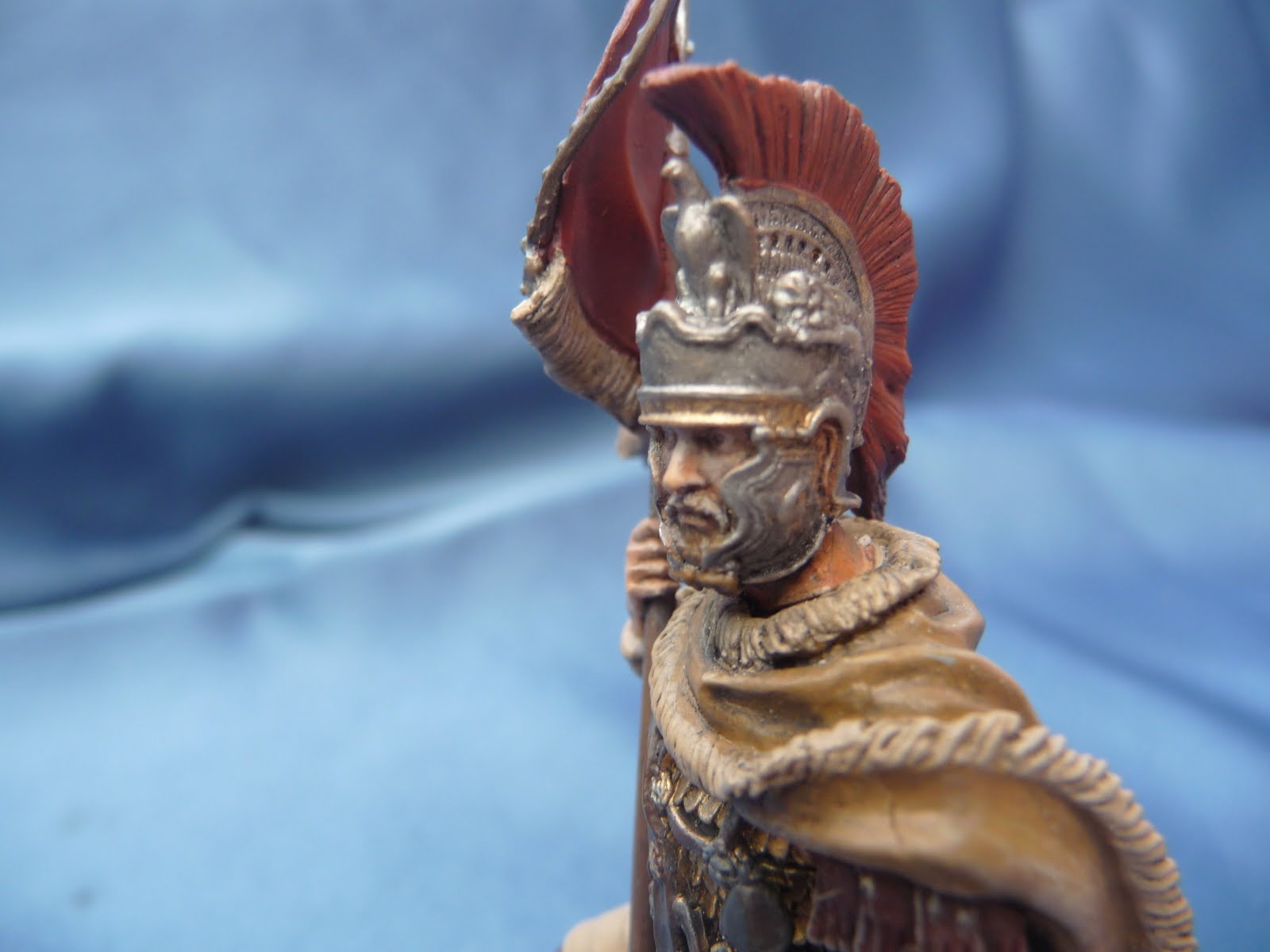
Roman cavalry Vexillifer, 3rd century A.D.

by Michael Rieß


The figure shows a Vexillifer (standard bearer) of the Roman cavalry in the 3rd century A.D. He wears scale armor and a very elaborate helmet, which was probably worn for parades only.

This is my second 54mm (1/32 scale) white metal figure from the Italian producer "Soldiers". The details are superb and i enjoyed painting the figure. I used acrylic paints from Revell and Lifecolor and oil paints from 502 Abteilung.


Saturday, June 4, 2011

Warhammer tutorial | How To Paint Ork's


Lester Bursley from Awesomepaintjob.com has just released an ALL new tutorial. He is a skilled artist and even though you might not be interested in Warhammer or Sci-Fi, Les still got a lot to offer and everybody can learn from this guy. 

This time it's an Ork that's on the workbench. 

Tuesday, January 11, 2011

Rest Models 1/32 Macedonian Phalangite

by Hamikar Barkas


This is a resin figure from Rest Models(Ukraine). It is the best resin figure in 1/32 scale i have ever seen! Great details, good quality and beneficial. I just had to add the middle part of the pike myself. Rest Models has a lot of other interesting figures in its program, i will try to get another figure in the next time.


The Macedonian Phalangites (pezhetairoi or foot companions) formed the main heavy infantry force of the Macedonian Army. These soldiers were equipped with a very long pike (sarissa), a short sword and a rimless shield hanging from the shoulder to fight in the distinctive Macedonian variant of the greek phalanx. The sarissa bearing phalanx would usually march to battle in open formation to facilitate movement. Before the charge, it would tighten its files to close formation or even compact formation (synaspsimos). The tight formation of the phalanx created a "wall of pikes", and the pike was so long that there were fully five rows of them projecting in front of the front rank of men—even if an enemy got past the first row, there were still four more to stop him. The back rows bore their pikes angled upwards in readiness, which served the additional purpose of deflecting incoming arrows. The Macedonian phalanx was considered invulnerable from the front, except against another such phalanx; the only way it was ever generally defeated was by breaking its formation or outflanking it.


Related Posts Plugin for WordPress, Blogger...